So your dentist just said the words “root canal,” and your stomach did that little drop. Most people react the same way – it’s almost automatic at this point, like the phrase itself is scarier than anything that actually happens in the chair.
Here’s the thing, though: a root canal isn’t what’s causing you pain. It’s the infection or inflammation already inside your tooth that hurts. The treatment is what gets rid of that – not what starts it. Once it’s numbed and done properly, most people walk out relieved, not worse off than when they walked in.
We hear this question constantly at our dental clinic in Siliguri – usually right before someone books, and every so often right after they’ve cancelled out of nerves. So let’s go through it properly: why root canals got such a bad name in the first place, what one actually feels like now, and what you can expect if you’re looking into root canal treatment in Siliguri.
Why Does Root Canal Treatment Have Such a Bad Reputation?
Part of it is just old news that never got updated. Anaesthesia and instruments have come a long way – but back when a lot of today’s adults were kids, that wasn’t the case. Root canals really could hurt back then, and that memory stuck around long after the technology moved on. Someone’s uncle had a bad experience decades ago, told the story one too many times, and now it’s practically folklore.
The other reason is simpler: by the time most people actually need a root canal, they’re already in pain. The tooth’s throbbing, or it won’t stop reacting to anything hot or cold. So the discomfort they were feeling before the appointment gets tangled up with the appointment itself – even though the treatment is what actually makes that pain go away.
What Does a Root Canal Actually Feel Like?
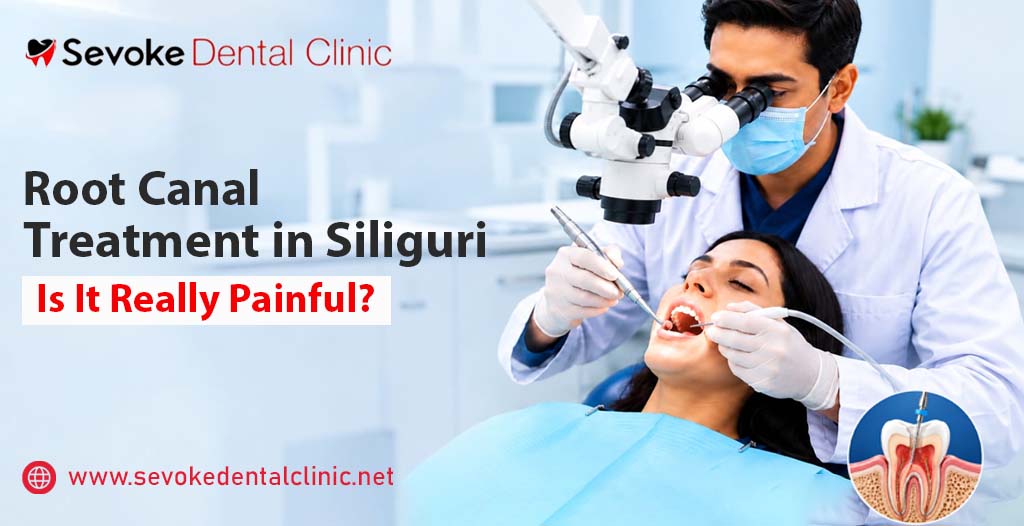
Modern root canal treatment is done under local anaesthesia, the same numbing injections used for fillings. Once the area is numb, you shouldn’t feel sharp pain during the procedure – most patients describe pressure or vibration rather than pain, similar to getting a deep filling.
Here’s roughly what happens during a root canal treatment:
- Numbing the area – A local anaesthetic is applied so the tooth and surrounding gum go completely numb.
- Removing the infected pulp – The dentist creates a small opening in the tooth and removes the infected or inflamed nerve tissue inside.
- Cleaning and shaping the canal – The inside of the tooth is carefully cleaned to remove bacteria and debris.
- Filling and sealing – The cleaned canal is filled with a biocompatible material and sealed to prevent reinfection.
- Restoring the tooth – A filling or dental crown is placed on top to protect the tooth and restore its strength for everyday chewing.
With digital tools and rotary instruments used at most dental clinics in Siliguri today, a straightforward root canal can often be completed in one or two visits, each lasting under an hour.
What About After the Procedure?
This is the part people don’t always ask about, so it’s worth covering honestly. It’s normal to feel mild soreness or sensitivity around the treated tooth for a couple of days afterward – your tooth and gum have just been worked on, after all. This is usually managed easily with an over-the-counter pain reliever recommended by your dentist, and it settles down on its own within a few days.
What you shouldn’t feel is the sharp, throbbing pain that likely brought you into the clinic in the first place. If that pain continues or worsens after treatment, it’s worth going back to your dentist rather than waiting it out – that’s not typical, and it’s better checked than ignored.
Signs You Might Need Root Canal Treatment
You don’t need to wait for unbearable pain before getting checked out. Some common signs that a tooth may need root canal treatment include:
- Persistent tooth pain, especially when chewing or applying pressure
- Sensitivity to hot or cold that lingers well after the trigger is gone
- Swelling or tenderness in the gum near a specific tooth
- A tooth that has darkened or discoloured compared to the ones next to it
- A small, recurring pimple-like bump on the gum
If any of this sounds familiar, it’s worth getting the tooth examined at a dental clinic in Siliguri sooner rather than later. Catching an infection early generally means a simpler, more comfortable treatment.
Root Canal vs. Extraction: Why Save the Tooth?
It’s a fair question – if a tooth is infected, why not just remove it? In most cases, keeping your natural tooth is the better long-term choice. Root canal treatment lets you preserve your natural bite, avoid the bone loss that can follow tooth extraction, and skip the extra cost and time of getting an implant or bridge later. Where the tooth structure allows it, dentists will usually recommend saving it first.
What to Expect When You Visit Us
At Sevoke Dental Clinic, we’ve been treating patients on Sevoke Road in Siliguri for over 15 years, and root canal treatment is one of the procedures we perform regularly. Before any treatment, we take the time to explain what’s happening with your tooth, walk you through what the procedure will involve, and answer whatever questions are actually making you nervous – because for most patients, understanding the process is half the battle.
If fear’s been the only thing keeping you from booking a check-up, that’s worth reconsidering. Sometimes it turns out the tooth doesn’t even need a root canal at all – but there’s no way to know that without actually having someone look at it.
Frequently Asked Questions
Is root canal treatment painful?
How many visits does a root canal usually take?
How long does root canal pain relief last?
Can I eat normally after a root canal?
Is it better to get a root canal or remove the tooth?
Don't Let Fear Decide for You
Most of the fear around this procedure is really just old information that never got updated. Root canal treatment today is routine – it’s meant to relieve pain, not add to it. If you’ve got a toothache that won’t quit, or you’ve already been told you might need a root canal, the next useful step is getting it looked at properly. Not another late-night search session reading about worst-case stories from a decade ago.
If you’re looking into root canal treatment in Siliguri, come talk to us at Sevoke Dental Clinic. We’ll take a proper look, walk you through what’s actually going on, and help sort out the pain – whenever you’re ready to book.