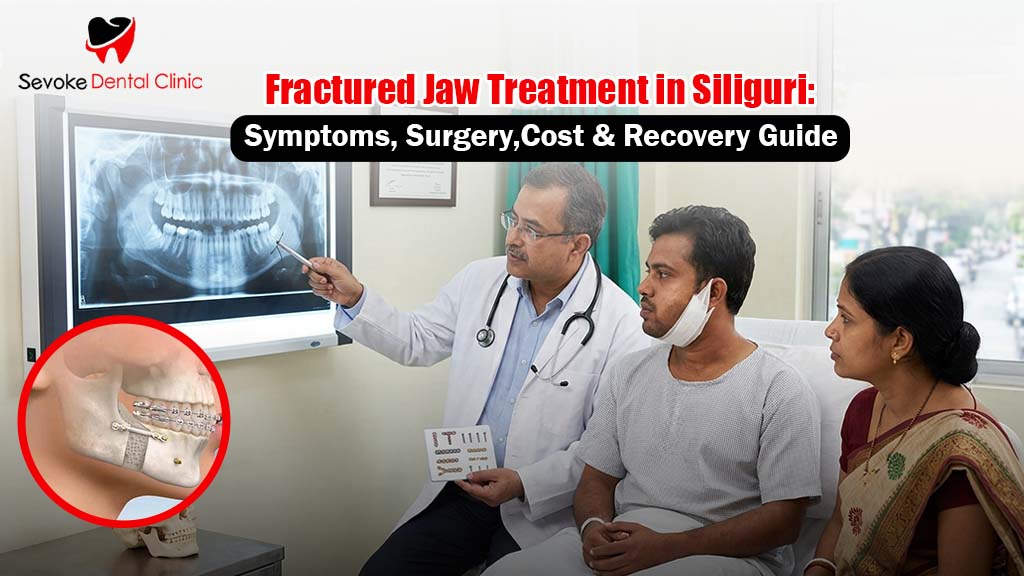
Your jaw is talking – Are you listening?
A fractured jaw is the symptom where there is any breakage in the lower (mandible) or upper jawbone (maxilla). A fractured jaw requires immediate attention. One wrong fall can disrupt the way you speak or eat. A jaw fracture is not only an accident but it can damage your facial structure permanently. Heal quickly and correctly.
Understanding the Jawbone
The jawbone serves a much more vital purpose in everyday life than most individuals are aware of. It fixes your teeth, allows you to talk, chew and swallow. Anatomically, the jaw has two components:
- Upper jawbone (maxilla): This is fixed and immobile; this is what makes the roof of your mouth and the upper teeth attached.
- Lower jawbone (mandible): It moves freely, in all directions, forward, backwards, and sideways, due to the presence of two temporomandibular joints (TMJ), which maintain its connection to your skull.
Breaking or displacement of any of these parts of this structure implies immediate and agonistic impact. The only difference is that most jaw injuries will heal successfully and completely with the proper diagnosis and treatment. And the good news for residents and families across the region is that world-class fractured jaw treatment in Siliguri is no longer out of reach
Common Causes of Fractured Jaw
The jaw bone is the most active bone of the human body. Despite its amazing strength, it can be instantly dislodged or fractured by the kind of attack at the right angle. The first step to prevention and prompt treatment is knowing what causes a jaw fracture.
Most often, Jaw Fractures are caused by:
- Road accidents – especially two in the busiest routes of road accidents involving two-wheelers.
- Physical Assault- if you get punched or blow from the opponent leading to facial injuries.
- Sport Injury- Sports injuries from contact sports such as football, cricket and kabaddi are common.
- Workplace Accidents – It can be very common as industrial and constructional sites are prone to accidents.Tripping, particularly among the elderly or construction workers.
- Domestic accident – You can slip in the bathroom, fall from the stairs leading to fractured jaw.
Recognising the Symptoms of Fractured Jaw
You can move forward if you know what to anticipate. The most common signs of fractured jaw are as follows:
Pain, Functional Signs:
- Extreme pain in the jaw
- Pain while you are opening mouth
- Discomfort while chewing, talking, or swallowing
- Pain in the ear or in the part of the jaw that feels pressured
Visible Signs:
- Swelling, bruising on the cheek or lips.
- Teeth get crooked when biting anything.
- Experience bleeding in nose or mouth
Neurological and Breathing Signs:
- Face or lower lip numbness
- Difficulty in breathing
- Bleeding from the nose or mouth
Fracture Location in the Jawbone
Fractures of the mandible most commonly occur in four parts of the mandible:
- Body: The primary part of the jaw holding the teeth.
- Angle: The curved area where the jaw is bent upwards towards the ear.
- Condyl: The knob-like joint at the top of the jawbone.
- Symphysis: The frontal, mid-point where the two halves of the jaw come together.
Diagnosis: What to Expect
A maxillofacial surgeon will assess the injuries in a hospital or specialty clinic and typically order:
- The first and most common imaging method to assess a fracture is an X-ray.
- When dealing with complicated or numerous fractures, a CT scan can help visualize the bone more clearly in three dimensions.
- Physical check-up – bite alignment, jaw movements, nerve function, soft tissue injury.
The recommended treatment plan then depends on the type, location and severity. Do not panic if you need fractured jaw treatment, a recommended plan will heal you right.
Treatment Options
There are various treatment options offered to patients who face jaw dislocation and jaw fractures. Check out the following fractured jaw treatment, given to the patients.
Conservative Treatment (Mild Fractures & Dislocations)
All jaw injuries may not be surgically necessary. For minor cases:
- A trained physician does a manual reposition of a dislocated jaw.
- A Barton bandage – bandaged around the base of the chin and over the top of the head – is used for several weeks to restrict the movement of the jaw.
- Anti-inflammatory, soft diet, and rest will aid in recovery.
Jaw Wiring- Intermaxillary Fixation (IMF)
In milder fractures, the upper and lower jaws are wired together by a surgeon:
- Fully immobilises the jaw in 4 to 6 weeks.
- Allows the broken bone to grow back in the right position.
- During this time, patients need to take fluid sustenance by straw only.
- Regular follow-up X-rays check bone healing.
ORIF Surgery - Open Reduction and Internal Fixation
Surgery is the most appropriate treatment in case of severe or displaced fractures:
- Surgeons carefully cut through the bone to reach the fractured bone.
- The fragments of bones are also redirected and fixed with titanium plates and screws.
- It is performed with general anaesthesia.
- They can be found in multiple hospitals and maxillofacial surgery units
- The majority of the patients can go home within 2-3 days of surgery.
Approximate Treatment Costs
Treatment | Estimated Cost |
Conservative management / Barton bandage | ₹5,000 – ₹15,000 approx |
Jaw wiring (Intermaxillary Fixation) | ₹8,000 – ₹25,000 approx |
ORIF surgery (titanium plating) | ₹40,000 – ₹1,20,000 approx |
Hospitalisation (per day) | ₹2,500 – ₹6,000approx |
Imaging (X-ray + CT scan) | ₹1,500 – ₹5,000 approx |
Recovery Phases After Fracture Jaw Treatment
If your treatment was either a surgery or a conservative approach, you have to be patient and manage yourself. This is what is to be expected:
Phase | Timeline | Diet | Care Tips | Watch Out For |
Immediate | Day 1 -Day 3 | Clear liquids only – water, coconut water, glucose drinks | Ice packs every 2 hours; complete bed rest; head elevated | Heavy bleeding, breathing difficulty, fever above 102°F |
Early Healing | Day 4 – Day 14 | Take liquid diets such as soups, juices, smoothies, and protein shakes | Wear Barton bandage; gentle mouth rinsing; no strenuous activity | Pus or discharge, worsening pain, spreading numbness |
Active Healing | Week 3 -Week 6 | Have semi-liquid diets such as mashed rice, curd, khichdi, porridge, and banana | Follow-up X-ray at week 4; jaw support when yawning or sneezing | Jaw clicking, teeth misalignment, persistent swelling |
Consolidation | Week 7 – Week 12 | Now you can take semi-solid diets such as soft fish, paneer, soaked chapati, and cooked vegetables | Jaw wiring removed; begin physiotherapy and strengthening exercises | Jaw locking, relapse of swelling, new pain |
Full Recovery | Month 3-Month 6 | You can have a normal diet. | Final X-ray confirmation; dental review for any tooth damage | Long-term pain, jaw deviation, and persistent numbness |
Why Sevoke Dental?
The following are the reasons why Sevoke Dental Clinic is the best choice for Fractured Jaw Treatment in Siliguri:
Experienced Team of Experts
- On-board staff of highly qualified and experienced dental surgeons and maxillofacial specialists.
- Specialised staff that is well-trained in the current surgical and non-surgical methods of treating the jaw.
- Lifelong learning keeps medical knowledge and skills up to date.
Advanced Technology & Equipment
- State-of-the-art digital X-ray and CT scans make an accurate diagnosis
- Modern operating theatres with the latest operating instruments and tools
- High-level sterilisation procedures to provide a totally safe and hygienic environment
Full Dental & Jaw Services in a Single Location
- Full recovery of jaw fracture, dislocation and TMJ disorders.
- Complete assortment of dental services – routine check-ups to complicated oral surgeries.
- Maxillofacial and dental emergency treatment is provided when you need it the most.
- The pre-surgery consultation, surgery and post-operative follow-up are all under one roof.
Located in the Midst of Siliguri
- Location is easily accessible
- Catering to patients in Siliguri, Darjeeling district, Jalpaiguri, Cooch Behar and the Dooars region.
Affordable & Transparent Pricing
- Competitive and fair pricing with no hidden charges
- Detailed cost breakdown provided before any procedure begins
- Flexible payment options to suit every budget
- Assistance with Swasthya Sathi and Ayushman Bharat (PMJAY) scheme claim
Patient-First Approach
- From the first visit, they have been kind, amiable, and gentle.
- Doctors have the patience to listen to you
- customized treatment programs that take into account each patient’s needs and condition.
- Wait times are short and reservations are simple.
Hygiene and Safety Standards
- Compliance with national and international infection control guidelines.
- Disposable instruments are used where possible.
- Sanitise treatment rooms and rooms regularly.
Frequently Asked Questions
Q1. What are the common symptoms of fractured jaw?
Q2. How long does the surgery take?
Q3. What is the approximate cost of jaw treatment in Siliguri?
Q4. How many days does it take for jaw recovery?
Final Word
Don’t Wait – Your Jaw Health Cannot Afford Delay
Every hour you wait with an untreated jaw fracture or dental emergency increases the risk of permanent damage, nerve injury, and complicated surgery. Pain is your body’s warning signal – do not ignore it.
At Sevoke Dental Clinic, we are ready for you RIGHT NOW