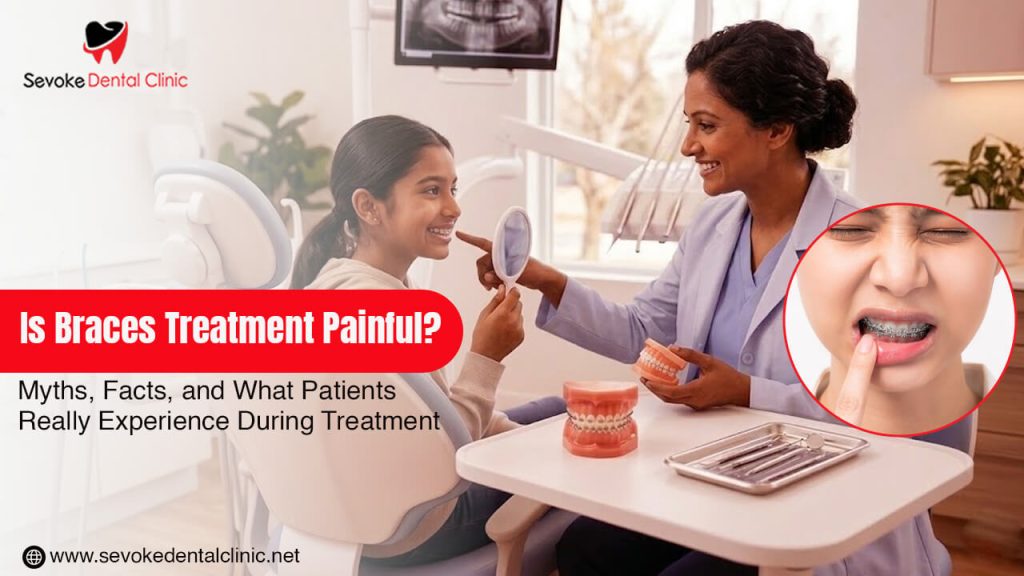
Does it hurt? Is always the first question.
Whether a nervous teenager sitting with parents or a 32-year-old professional finally fixing that crowding problem—pain dominates conversation before anything else gets discussed.
Honest answer? Braces treatment involves discomfort. Not too much pain though. Not constant throbbing either. Some discomfort at specific points. Gap between what people imagine and what actually happens? Pretty significant honestly.
Causes of Discomfort During Braces Treatment
Teeth don’t shift easily. Anchored into bone. When orthodontic treatment applies pressure to move them, surrounding tissue responds. Blood flow changes. Bone remodels slowly. It takes months. This biological process creates sensations—mild pressure sometimes, genuine soreness other times.
The first 3-5 days after getting braces fitted are only the worse days. Everything feels foreign. Brackets press against cheeks. Lips catch on metal constantly. And teeth? Ache when biting anything firmer than dal.
Here’s what rarely gets mentioned though. Initial phase passes. By day seven or eight, most patients feel almost normal again. Mouth adapts faster than expected.
Monthly Adjustments—What They Feel Like
Every 4-6 weeks, the orthodontist tightens wires or changes them completely. Reactivates pressure. Patients often dread these appointments more than initial fitting.
One factor often overlooked: type of adjustment matters. Minor wire tweaks produce less soreness than switching to thicker gauge wires. Experienced practitioner sequences adjustments carefully. Minimizes unnecessary pain during braces while maintaining treatment progress.
Different Types of Braces, Different Experiences
Not all orthodontic appliances feel the same.
Metal braces—traditional kind—create more initial irritation against soft tissue. Bulk is the issue. Brackets have edges. Wires poke occasionally. Orthodontic wax becomes essential the first few weeks. Absolutely essential.
Ceramic braces offer similar mechanics but smoother surfaces generally. Gentler on cheeks and lips for most patients. Trade-off? More fragile. Require careful eating habits throughout treatment duration.
Invisible braces—clear aligners—present a completely different experience. No brackets scraping anything. No wires poking. But pressure still exists. Each new aligner tray feels tight the first day or two. Some patients actually report more consistent low-grade pressure compared to traditional options. Those spike and fade with adjustments. Aligners maintain steadier force.
“Least painful” option depends entirely on individual anatomy and what needs correcting. Someone with significant crowding might find aligners uncomfortable because of movements required. Someone with minor spacing issues? Might breeze through the same treatment.
Does Age Make Difference?
Common assumption: braces for kids hurt less than braces for adults. Younger bones are more flexible. Teeth move easier. Sounds logical right?
Partially true. Children’s treatment often progresses faster. But faster movement doesn’t automatically mean less discomfort. Kids also have lower pain thresholds typically. Less patience for ongoing annoyances too.
Adults tolerate differently. Understand the process intellectually. Making choices rather than being told by parents. This matters more than people realize. Motivated 35-year-old often reports less pain during braces than 13-year-old getting identical dental braces procedure.
What does increase with age: soft tissue sensitivity. Gums that haven’t dealt with orthodontic pressure before react more strongly initially. Usually settles within the first month though.
Myths That Need Addressing
Myth: Braces hurt constantly for the entire treatment.
Fact: Discomfort occurs in waves. Primarily after initial placement. Following adjustments too. Between these periods? Most patients forget they’re wearing braces entirely.
Myth: Tightening appointments are unbearable.
Fact: Modern techniques use lighter, more consistent forces than methods from 20 years back. “Tightening” concept itself is somewhat outdated. Contemporary treatment focuses on controlled pressure rather than maximum force.
Myth: Pain means treatment working.
Fact: Teeth move effectively with minimal discomfort. Excessive pain might indicate a problem—poking wire, loose bracket, something needing attention. Don’t assume suffering means progress.
Myth: Normal eating is impossible for months.
Fact: Dietary restrictions apply to very hard or sticky foods. Could damage brackets. Within a week of placement, most patients eat normally. Minor modifications only.
Managing Discomfort Practically
Orthodontic wax works. Keep it everywhere. Home, Office, Bag. Apply over any bracket causing irritation before the sore spot develops fully.
Cold foods help during the first few days. Ice cream has genuine therapeutic value here. Not joking. Cold reduces inflammation. Numb sensitivity temporarily.
Saltwater rinses work wonderfully.Two-three times daily. Simple but effective.
Something counterintuitive: gentle chewing helps. Soft foods actually increase blood flow. Can reduce aching sensation faster. Avoiding all chewing prolongs adjustment period.
What Patients at Sevoke Dental Clinic Report
Feedback follows predictable patterns honestly. Days 1-4 get described as “annoying” or “uncomfortable” most frequently. The word “painful” comes up rarely. By the two-week mark, comments shift to how quickly they adjusted.
The dental braces procedure itself—actual fitting appointment—takes about 60-90 minutes. Involves no pain beyond mild pressure. No anesthesia needed. The bonding process feels strange but doesn’t hurt.
Braces cost in Siliguri varies based on treatment complexity and appliance type. Financial investment rarely correlates with pain levels though. More expensive treatment isn’t necessarily more comfortable.
Frequently Asked Questions (FAQs)
How long does soreness last after getting braces put on?
Which type of braces hurts least?
Is treatment more painful for adults?
Conclusion
Braces treatment benefits last decades. Discomfort? Days at a time. Scattered across months of treatment. That ratio matters when making decisions about teeth alignment.
Anyone considering orthodontic treatment should address pain concerns during consultation. Ask about expected timelines. Ask about management strategies. Ask what patients with similar cases experienced.
Informed expectations make everything easier. And the modern braces treatment is far gentler than most people imagine walking into that first appointment at any dental clinic for braces.